Judging La Jueza

Before the confirmation hearings of Sonia Sotomayor, NY1 Noticias aired a three part series on her nomination, which I produced for my friend and former co-blogger Juan Manuel Benítez.

Click on the stills for the chapters of “Nominación histórica.”

FIRST EPISODE: How the nomination of Sotomayor united a fragmented Hispanic community.

Nominacion 1

SECOND EPISODE: What is the real power of the Supreme Court and how could Sotomayor affect it?

SCOTUS

THIRD EPISODE: The attacks Sotomayor received on her way to the hearings.

sotomayor diario

Those güeyes at Guanabee

Anyguey

I discovered Guanabee being nominated for a certain contest. Soon I became addicted to their shameless mash-up of pop culture and all things Latino—particularly their mockery of Latino stereotypes.

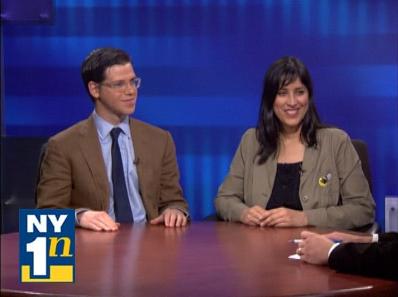
A few weeks later, after losing in the first round of their competition —and just in time for the release of their macho spin-off Anygüey—, I interviewed its co-founders, Daniel Mauser and Cindy Alvarez.

[On Anygüey]

From the Pages of El Mercurio

Mercurio_NY

[Translation of text published by Chilean newspaper El Mercurio, as part of an article on Chileans living in New York. For the Spanish version, click on the image above.]


We all came to New York to try our luck, attracted to the myth of the city: the spell of its skyscrapers, the scenes from our favorite films, the shine of artistic talents that first exploded here, the never ending clink of their imaginary Martini glasses. Inevitably —as someone whose name escapes me wrote— New Yorkers are divided among those who succeeded and those who ruminate their failure.

We are all passing through New York. One of the first things you notice when you start growing roots here is that almost everyone came from somewhere else. (Getting to know native New Yorkers is normally a lengthy task for newcomers, a new layer of belonging.) Yet, it could be argued that we are all native New Yorkers after approving the arduous exam of settling here. There are those, however, that insist 6 to 10 years is the minimum time committment necessary to earn the title. (And after becoming a real New Yorker, you will suddenly find it impossible to leave, they always add.)

In contrast to the cliché that New York is the capital of the world, E.B. White offered a less glamorous view: New York is nothing but an infinity of self-sufficient unities, struggling for identity from one block to the next. The vertiginous quality of New York does not prevent the creation of feelings of attachment to your neighbors, of belonging to a corner, something that progress has destroyed elsewhere. 

New Yorkers are always looking to discover new worlds within the boundaries of the city. Restaurants that are opening or closing their doors, festivals held once a year in a remote corner of a borough far from your own, a journey to an unknown neighborhood looking for a unique dish.  Everything is a good excuse to jump on the subway and travel through a different world for a couple of hours.

Few things infuriate me more that when a visiting friend or relative says that New Yorkers are not nice. True, some people walk down the street, tension and anxiety written all over their faces. But usually New Yorkers are just trying to get where they are going as quickly as they can.  And, yes, getting into a fight with a New Yorker —millionaire or homeless, it doesn’t matter— means tempting fate. But when you need directions, a place to eat, a practical favor from your neighbor, or want to start a conversation in a bar or a square, New Yorkers are accustomed to debating, sharing and helping each other.

We all came to New York in search of that unnatainable fantasy, but stayed because we fell in love with reality: an afternoon crossing the Brooklyn Bridge by bike, a concert that couldn’t happen anywhere else, the smell of coffee in the mornings, the light rain on your face when leaving a bar, the unlikely mix of people in the subway coming home on a Saturday night.

The five boroughs as an infinite map that may well lead to happiness.

More than boom-ch-boom-chick

41361QYNVFL._SS500_

Relishing the rich and varied canon of Latin music, I could not believe my bad luck when I moved to New York in 2004 and all you could hear blasting from cars, delis and bars was Daddy Yankee’s “Gasolina.” Not only was it the dance-du-jour, ready to spread like fire throughout the continent, but somehow this phenomena made the question of Latino identity in this country even more complicated.

Now that the waters have settled —Daddy Yankee showed his true colors by endorsing John McCain for President, artists like Calle 13  pushing the genre in new directions— Reggaetón has come of age by receiving the academic treatment. Reggaetón (Duke University Press, 2009), a collection of essays and in-depth interviews, gives the first great blast of Latino music in the XXI century a much needed perspective.

Essays like co-editor Wayne Marshall‘s “From Música Negra to Reggaeton Latino” show the complex and transnational evolution of the genre. His musicological analysis of —yes— “Gasolina” even made me listen to that awful song with an attention I didn’t think possible. Other texts included in the volume, such as an interview with Panamaniam reggaetón forefather El General —police officers cutting his dreadlocks, public buses serving as moving clubs— bring the music back to where it belongs: the heart.

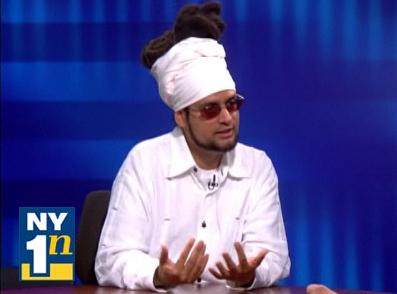
At NY1 Noticias, I had the opportunity to interview one of the co-editors of the project, Hunter College researcher and musician Raquel Z. Rivera.

Watch the interview.

Álvaro Enrigue and the Problem of Literality

alvaro enrigue

The Dalkey Archive Press recently published The Best of Contemporary Mexican Fiction, a stunning bilingual collection of 16 short stories by writers born after 1945. Álvaro Enrigue contributed with “On the Death of the Author,” which begins as an anecdote —a writer trying to tell the story of the last pure American Indian—, and seems to encapsulate the world.  The heart of the issue and one of the most basic questions in literature: how to escape from literality to create art.

Read the story in English or in Spanish.

Watch the video.