I♥BK

[Published on Qué Pasa on April 9, 2010]

SI LOS RASCACIELOS, los teatros y los parques de Manhattan son la cara de Nueva York, Brooklyn es su corazón. El más poblado de los cinco condados que conforman la ciudad (sus dos millones y medio de habitantes lo harían la cuarta urbe con más habitantes de Estados Unidos) es donde el mito de Nueva York como un caldero de colores, ritmos y lenguas es más real que en ningún otro lugar.

A casi cuatro siglos de su fundación y 112 años de haber sido anexado a la Ciudad de Nueva York, en Brooklyn se sigue respirando un aire distinto al de Manhattan. Su horizonte todavía está delineado por sus brownstones, esos edificios de arenisca café y no más de cuatro pisos, y sus residentes continúan hablando de “ir a la ciudad” para referirse al viaje a Manhattan en metro, taxi o bicicleta. Las comunidades étnicas (judíos jasídicos, italoamericanos, jamaiquinos, rusos) siguen cultivando su identidad con límites geográficos definidos; el afilador de cuchillos sigue apareciendo de vez en cuando en su camión verde con un cigarro en la boca; y el Cyclone, quizás la montaña rusa más emblemática del mundo, sigue sacudiendo su blanca estructura de madera junto a la arena y el entablado de Coney Island. Y, claro, están el dialecto y el acento de Brooklyn, con sus vocales estiradas y sus eres inexistentes: Fuggedabouddit!

Pero Brooklyn es también presente. Su Museo de Arte sorprende con muestras como la reciente “Who Shot Rock and Roll”, un centro de arte feminista o sus retrospectivas de Basquiat y Murakami. Y si hablamos de música, fue de sus calles de donde salieron muchos de los grupos de rock y pop más interesantes de los últimos años, como TV on the Radio, Grizzly Bear, Dirty Projectors, The National y MGMT.

En literatura, cuesta encontrar a nuevos talentos neoyorquinos que no vivan en Brooklyn. A la sombra de Paul Auster —estatua viviente de las letras del condado— florecen nombres como Rick Moody, Nicole Krauss, y el trío de Jonathans: Lethem, Safran Foer, y Ames. (Este último escribió la serie de televisión Bored to Death, probablemente uno de los mejores retratos de la burguesía bohemia del condado).

Brooklyn es, también, la eterna fiesta gastronómica de sus comunidades inmigrantes (de hecho, demasiado extensa para resumir aquí), revitalizada por el refinado gusto de sus foodies, jóvenes barbudos y tatuados que abren restaurantes, fabrican semi-artesanalmente quesos o cerveza, o tuestan café con devoción. (“Toma”, me dijo hace poco un tostador amigo al pasarme una bolsa de granos guatemaltecos como si fueran una droga experimental. “Nadie más tiene este café”).

Pero, sobre todo, Brooklyn es futuro, el lugar que, por su relativa tranquilidad y arriendos bajos, ha atraído a parejas jóvenes a punto de convertirse en padres. Aquí fue donde nació mi hijo y donde —acaso más importante—vio su primera película, Yellow Submarine, en una función para niños.

En esa tarde lluviosa, mientras los colores psicodélicos explotaban en la pantalla y los Beatles salvaban el mundo cantando “Sgt. Pepper’s Lonely Hearts Club Band”, vi su melena sacudirse mientras sus ojos absorbían un mundo nuevo. Y luego miré a mi alrededor y vi muchas otras cabecitas haciendo lo mismo y pensé que la escena sólo podía transcurrir en Brooklyn. Y, sí, también que el futuro puede ser mejor

Grupo Folklórico does Arsenio

Many Latin music acts that have been around for a while carry the tag of “legendary” in their press releases. But few of them have surprised as much as Grupo Folklórico y Experimental Nuevayorquino did a few years ago, when they reunited to play a few concerts 30 years after releasing their second album.

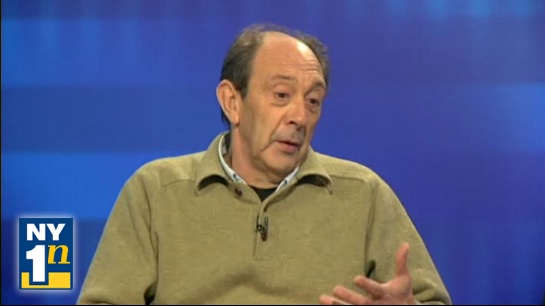
This week, they have got together again to play a single concert in The Bronx, tributing the music of Cuban star (and yes, true legend) Arsenio Rodríguez. I had the incredible fortune of interviewing Grupo Folklórico’s producer, René López, and Israel Berríos, who played with Rodríguez for 13 years, at NY1 Noticias.

Watch here.

The Debt of Rafael Gumucio

I have admired the wit and writing chops of Rafael Gumucio since I first read his columns and short stories in Chilean newspaper El Mercurio somewehere in the early nineties. Everything he touched was immediately impregnated with self-deprecation, melancholy and a strange sense of humor. When his first book, a collection of stories, was widely panned, I smelled envy. (It would take me many years to understand why—but that’s another story.) Soon after that, Gumucio started appearing on TV shows, taking part in the cult-phenomenon Plan Z, still one of the most inventive comedy shows in the history of Chilean TV. Further books gained him national and international respect.

When I had the chance to meet him and interview him in New York, the circle was closing: he had published La deuda, a novel that, once again, I liked against the judgment of Chilean critics. In this interview, we talked about that book and his interest in tackling a topic good Chilean literature has barely scratched: the middle class.

After the Earthquake

At 3:34 a.m. on Saturday, February 27, when the fifth-strongest earthquake ever recorded hit a large area of Chile, I was sleeping with my wife in a hostel of Pucón, a beautiful town in the Lake District of the country. Even when Pucón didn’t receive the strongest impact of the earthquake and we suffered no damages (as a matter of fact, I went back to sleep a few minutes later), when I woke up the next morning, I realized three things: how lucky we had been; that returning to the north of the country that day as planned would be a great adventure; and that I should report to my TV station as soon as I could.

A few hours we made it to Ruta 5 Sur, the country’s main highway, we managed to connect to the Internet via a mobile broadband connection. Most of the telephone lines of the country were not working, so we didn’t find out that our 2 year old son and the rest of my family were alright until we talked to my brother, who lives in Switzerland, via Skype. He had been following the events of the earthquake since the European morning,

and had learned about our parents through a cousin who lives in Australia, and had somehow managed to talked to her parents, who were vacationing next to ours.

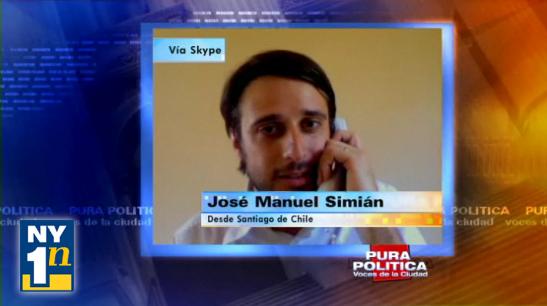
Then came work. Somewhere in a long detour from the destroyed highway, in the middle of a long line of cars that slowly crossed through Angol, I managed to make a phone dispatch (via Skype) to NY1 Noticias. In the next days, I combined meetings with family and friends with a series of phoners for Noticias and its sister station, NY1 News.

Here is a video dispatch I made for the show of my friend Juan Manuel Benítez, Pura Política:

Back in New York, I was invited to participate in NPR’s Tell Me More to talk about the earthquake and the undergoing inauguration of President Sebastián Piñera. [Listen  here.]

New Blog: Tinta Idiota

Just as if I had unlimited free time on my hands instead of none, I have decided to start a new blog on media. Tinta Idiota is a blog in Spanish about the digital revolution and journalists I admire and loath.

Why “idiot ink”? Because, paraphrasing Hölderlin, we are geniuses when we think, but idiots when we write. (Particularly if we are journalists, you might add.) Additionally, because of the volatile state of media, the printed word looks at times sad and stupid, while digital ink looks presumptuos, unstable and stupid. And, last but not least, because of those first verses in Dylan’s “Idiot Wind.”

As journalists, we are idiots, babe. It’s a wonder we can even feed ourselves.

Pie Derecho and the Mutant Latino

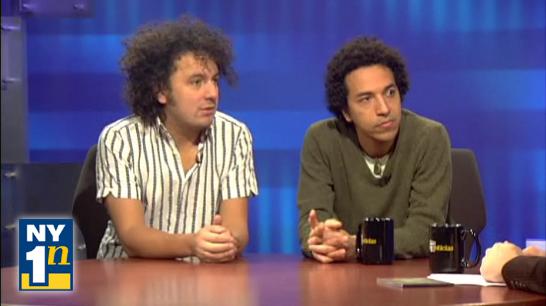
My friend Norberto Bogard, editor of monthly Latino-culture-in-NY magazine Pie Derecho, came to NY1 Noticias’ Pura Política to talk with Angelo Falcón (another person I admire in the Latino politics/media scene of New York) to discuss the state of Hispanic affairs and national politics.

Norberto —with whom I collaborate in Pie Derecho— had the kindness of quoting my notion of Latinos as a culturally mutant demographic because of assimilation and mutual influence among Latino groups, which makes us hard to catch by media and politicians.

The reference is at the very end of this video.